
Postmates - Food Delivery
Uber Technologies, Inc.Food & Drink
4.572.71K Reviews
- Version
- Varies With Device
- Installs
- 10.00M
- Age Rating
- Everyone
Screenshots

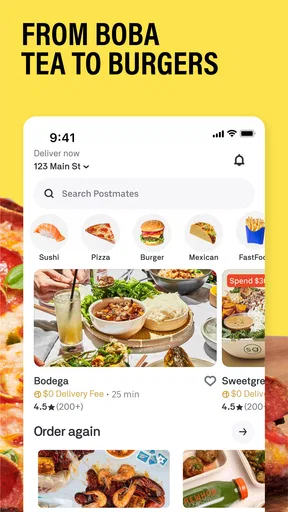
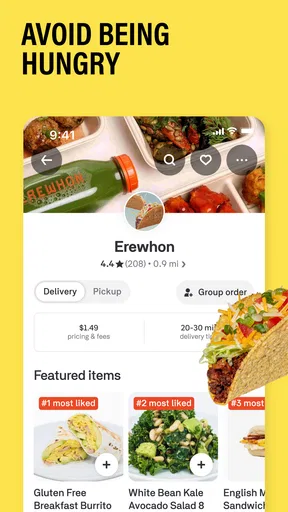
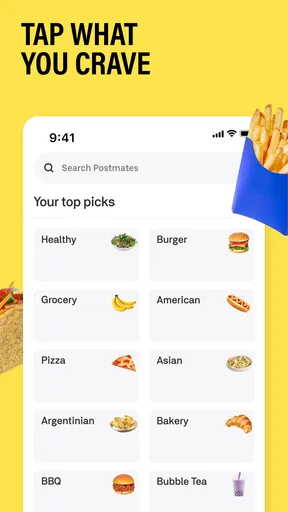
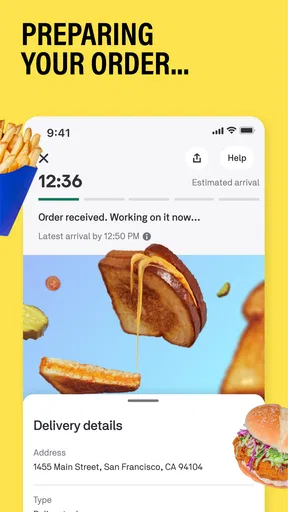
Our Review of Postmates - Food Delivery
 Analysis by Appyee
I came away from Postmates with a fairly clear impression: it is most useful when I want one familiar place to handle both a restaurant order and a small grocery run, rather than making me switch between several delivery apps. That convenience is the main reason I would recommend it. It is a free Food & Drink app from Uber Technologies, Inc., and its focus is practical rather than complicated: browse nearby options, choose what I need, and arrange delivery to my door.
The important distinction is that I do not see it as a replacement for every way of buying food. It works best for convenience, last-minute meals, and modest grocery needs. If I am planning a large, price-sensitive shop, visiting a nearby store myself may still make more sense. If I care deeply about one restaurant’s own ordering system or want the widest possible comparison of local services, another route can be better. Postmates is strongest when saving time matters more than achieving the lowest possible total.
How Postmates fits into everyday food ordering
My first impression is that the app is built around reducing the number of decisions between “I need food” and “food is on the way.” The experience combines restaurant delivery with grocery ordering, so I can use the same general workflow for two very different needs. That makes it particularly handy on busy evenings, during bad weather, or when I realize I am missing a few ingredients after I have already started cooking.
A realistic example is a weeknight when I have finished work late and do not want to drive anywhere. I might order a prepared meal, then notice that breakfast items or snacks are running low. Having restaurant and grocery choices in the same service makes that situation easier to manage than opening separate apps, creating multiple accounts, and checking several delivery areas. I would still review the final basket carefully, but the combined approach is genuinely useful.
The app has been available since January 28, 2014, and its long presence helps explain why it feels like an established option rather than a brand-new experiment. It has an average rating of 4.5 from around 237,000 ratings, with roughly 73,000 written reviews. Those figures do not guarantee that every order will be smooth, but they suggest that the basic concept works for a large number of people.
It is also a widely used service, with more than 10 million installs. I mention that because a delivery app benefits from being familiar: friends and family may already know how to use it, and a household can more easily settle on one service instead of teaching everyone a different ordering process. The app is free to install and has an Everyone content rating, so it is approachable for a broad audience.
The most useful part is the combined restaurant and grocery workflow
Many delivery apps are easy to understand when the only task is ordering a meal. Postmates becomes more interesting when I use it for food in a broader sense. A restaurant order solves immediate hunger, while a grocery order solves a household need. Keeping both purposes within one app makes it easier to treat delivery as a practical errand rather than only a way to buy takeout.
That does not mean I would automatically combine every order. A prepared meal and a grocery basket can have different priorities, and I would check the expected timing and the final cost before committing. The useful insight is that I can begin with one need and then decide whether another order belongs in the same planning session. This is more flexible than thinking of the app only as a restaurant directory.
For grocery shopping, I find it best suited to targeted baskets: ingredients for tonight, a few forgotten staples, drinks for guests, or items that are awkward to carry home. It is less compelling for a full weekly shop where I want to compare package sizes, inspect produce personally, and control every purchase. Delivery saves effort, but convenience can come with less control than walking through the store myself.
For restaurant orders, the main advantage is the ability to browse without calling several businesses. I can decide based on the available choices and the delivery arrangement shown in the ordering process. That is especially helpful when I am ordering for more than one person and need to balance different tastes. The trade-off is that browsing can encourage impulse choices, so I try to decide on a budget and a type of meal before scrolling too far.
Small ordering habits make a noticeable difference
One habit I recommend is treating the basket as a checklist rather than rushing straight to payment. For a restaurant order, I verify sides, drinks, substitutions, and special instructions before placing it. For groceries, I review quantities and item variations with even more care. A quick second look can prevent the common frustration of receiving a technically correct order that does not match what I thought I selected.
I also pay attention to whether I am ordering for immediate use or for later. A grocery delivery intended for dinner needs a different level of urgency from a basket of pantry items. If I am flexible, I can make the service feel more worthwhile by avoiding unnecessary last-minute pressure. If I am not flexible, I treat the delivery estimate as part of the decision, not as an afterthought.
Another useful approach is to use the app for a “gap-filling” trip. Instead of trying to replace a full supermarket visit, I order the two or three things that would otherwise force me back out. This is where I think Postmates has a practical edge: the value is not only in the food itself, but in avoiding a separate errand when my time is limited.
I would also be cautious with large group orders. The convenience is appealing, but a bigger basket creates more opportunities for missing customizations, unavailable items, or confusion about who ordered what. For a group, I prefer agreeing on the order before anyone starts adding items. That simple bit of organization makes the app easier to use and reduces the chance of an expensive surprise at checkout.
The meaningful weakness is the cost-versus-convenience trade-off
My biggest reservation is not the basic idea; it is the way delivery convenience can change the value of an order. The total amount matters more than the menu price or shelf price alone. Delivery-related charges and other order costs can make a small purchase feel disproportionate, especially when I am buying only one inexpensive item or a few groceries.
That is why I would not use Postmates automatically for every meal. Before placing an order, I compare the convenience with realistic alternatives: cooking something already at home, picking up the food myself, ordering directly from a restaurant, or adding the grocery items to my next normal shopping trip. Sometimes the app wins easily because my time or energy is limited. Other times, the extra convenience does not justify the final total.
There is also a practical limit to app-based grocery shopping. I cannot examine produce, compare packaging in person, or make a spontaneous substitution with the same confidence I have in a store. If an ingredient is central to a recipe, I prefer to order earlier or buy it myself. Postmates is more dependable for clearly identified items than for a basket where freshness and exact selection are essential.
Restaurant availability can be another source of friction. The most appealing option is not always the best option for the moment, particularly when I am ordering late or from a less central location. I try not to assume that a restaurant shown in the app will offer the same experience as an in-person visit. Delivery adds a layer between the kitchen and my table, and that can affect timing, presentation, and how much control I have over the order.
For that reason, I see the app as a convenience layer, not as a promise that every order will be perfect. I am happier with it when my expectations are realistic: I want a simple way to arrange food delivery, not a guarantee that every restaurant, item, or delivery situation will behave exactly as it would in person.
Who should use it, and who should look elsewhere
I think Postmates is a strong fit for people who value time and want restaurant and grocery delivery in one place. It suits busy workers, households managing different schedules, people without easy access to a car, and anyone who occasionally needs a small grocery rescue. It can also be useful for someone caring for a family member and trying to avoid an unnecessary trip outside.
It is a particularly good match for flexible shoppers. If I can accept a different restaurant, adjust the timing, or choose a substitute grocery item, I get more value from the service. Flexibility helps me use delivery as a planning tool instead of treating it as an emergency button every time.
I would be more hesitant to recommend it to strict budget shoppers who are willing to travel for lower prices. I would also suggest caution for people who prefer selecting produce personally, need a very specific product, or regularly place large grocery orders. In those cases, a local store, pickup service, or direct restaurant ordering may offer better control or better value.
Compared with calling a restaurant, the app is easier for browsing and keeps the order details visible while I decide. Compared with going to the restaurant, it saves travel but gives me less direct control over timing and presentation. Compared with a dedicated supermarket trip, it is faster for small needs but less satisfying for careful, high-volume shopping. Those comparisons make the app’s role clear: it is a middle ground between convenience and control.
Compared with using separate specialist apps, the combined food-and-grocery approach is the main reason to choose it. I do not have to treat dinner and household supplies as completely unrelated tasks. However, a specialist service can still be preferable when I want a particularly deep grocery selection, detailed store shopping controls, or a restaurant’s own loyalty and pickup experience. The better choice depends on whether simplicity or specialization matters more for that order.
What I would check before placing an order
I would begin by deciding whether I am paying for genuine time savings. If I am exhausted, stuck at home, or trying to solve an immediate problem, delivery can be worth it. If I have plenty of time and am near the restaurant or store, pickup or an in-person visit may be the smarter choice.
Next, I would inspect the basket carefully. I check the selected size, quantity, options, and any notes before confirming. This is especially important for groceries because a small difference in size or variety can change whether the item is useful. I also avoid adding random extras simply because they are easy to browse; a short, deliberate order is usually easier to evaluate.
For a meal shared with others, I would settle the menu before opening the checkout screen. That prevents a group from drifting into multiple add-ons and makes it easier to notice whether the order still fits the occasion. For groceries, I would separate “needed tonight” from “nice to have.” If the delivery becomes delayed, I then know which items matter most.
I would also keep a backup plan for anything time-sensitive. If dinner must arrive before a particular event, I would not rely on a delivery order without allowing some breathing room. The app can simplify the process, but it cannot remove the uncertainty that comes with traffic, restaurant preparation, item availability, or a busy delivery period.
My final view after using it
Postmates is best understood as a practical convenience app, not the cheapest or most controlled way to buy every kind of food. Its strongest quality is the way restaurant delivery and grocery ordering sit within the same general experience. That combination is genuinely helpful when I need to solve a food problem quickly, especially when a small grocery need appears alongside a meal decision.
I like it most for targeted orders, busy evenings, and situations where avoiding a trip has real value. I like it less for large weekly shops, highly specific grocery selections, and purchases where the final cost matters more than speed. The app earns a recommendation from me when I use it deliberately rather than automatically.
With a free price, an Everyone rating, broad adoption, and a solid 4.5 average, it is an easy service to try. My advice is to judge each order by its complete total, timing, and level of control—not just by how quickly the app lets me tap through a menu. For readers who want one familiar tool for local meals and occasional groceries, Postmates is a sensible choice. For shoppers who prioritize the lowest price or hands-on selection, the usual store visit, pickup option, or direct restaurant order may still be better.
Verdict
Strengths of Postmates - Food Delivery
- Wide selection of restaurants, groceries, and convenience stores
- Real-time order tracking helps you follow the courier’s progress
- Scheduled delivery makes planning meals more convenient
- Contactless delivery options improve convenience and safety
- In-app support helps resolve missing or incorrect order issues
Limitations of Postmates - Food Delivery
- Delivery fees, service charges, and small-order fees can increase the total
- Availability and delivery times vary significantly by location
- Busy periods may lead to delays or limited courier availability
- Prices and promotions can differ from ordering directly from restaurants
- Refunds or adjustments may take time when an order has problems
Other Releases by Uber Technologies, Inc.
View All
Uber - Request a ride
Maps & Navigation4.7

Uber - Driver: Drive & Deliver
Business4.6

Uber Eats: Food and Grocery
Food & Drink4.6
Similar Picks in This Category
View All
Rappi: Food Delivery, Grocery
Rappi, Inc - Delivery3.5

McDonald’s: Cupons e Delivery
Arcos Dorados4.3

Swiggy: Food Instamart Dineout
Swiggy4.7

Blinkit: Groceries & more
Blinkit4.8

foodpanda: food & groceries
Foodpanda GmbH a subsidiary of Delivery Hero SE4.0

Zomato: Food Delivery & Dining
Zomato4.7
Frequently Asked Questions
What is Postmates, and how does the food delivery service work?
Postmates is a delivery app that lets you order meals, groceries, convenience items, and other products from participating local businesses. After entering your delivery address, you can browse available stores, add items to your cart, choose a payment method, and follow the order status in the app. Availability, delivery times, and supported services depend on your location.
How much does Postmates delivery cost?
The total price usually includes the item cost, a delivery fee, a service fee, applicable taxes, and an optional tip. Fees can change depending on distance, demand, restaurant policies, order size, and local conditions. Before confirming an order, Postmates displays a cost breakdown, so it is worth reviewing the final total carefully rather than relying only on the menu prices.
Can I track my Postmates order and contact the courier?
Yes. Once an order is accepted and prepared, the app normally provides status updates and, when available, a map showing the courier’s progress. Postmates may also offer in-app communication options for delivery instructions or questions. Tracking accuracy can vary, particularly when a restaurant is still preparing the order or when the courier is handling multiple deliveries.
What should I do if my Postmates order is late, incorrect, or missing items?
If there is a problem, open the order in the Postmates app and use the help or support section as soon as possible. Clearly select the issue, such as a missing item, incorrect meal, damaged food, or non-delivery, and provide any useful details or photographs. Refunds, credits, or other resolutions are reviewed according to the order circumstances and the platform’s current policies.
Is Postmates available everywhere, and can I use it on Android and iPhone?
Postmates availability depends on the city, region, and participating merchants, so the service may not operate in every area. The app is designed for both Android and iPhone users, although supported features can vary by operating system and location. The most reliable way to check coverage is to install the official app and enter your delivery address before placing an order.
